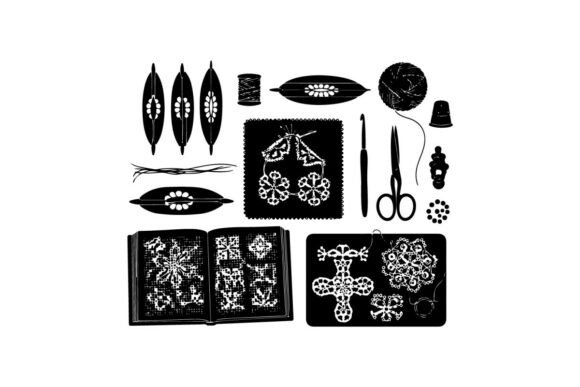
Handmade Embroidery Tools and Patterns V Review
As a professional embroidery designer who has digitized thousands of logos for small business owners, I know that the difference between a good brand and a great one often comes down to the quality of the design assets you choose. Today, I am reviewing Handmade Embroidery Tools and Patterns V, a digital product categorized under Illustrations and Graphics. This specific collection promises "Minimal Silhouette Clip Art" that is clean and scalable. For entrepreneurs running boutique cafes, handmade jewelry shops, or apparel brands, finding a machine embroidery design that translates well from screen to fabric is critical. Let's dive into how this graphic performs in real-world commercial applications.
First Impressions: A Modern Minimalist Approach
When I first opened the preview for Handmade Embroidery Tools and Patterns V, the aesthetic was immediately striking. The description highlights a "clean, modern look," and upon inspection, the silhouette style delivers exactly that. In the world of branding, less is often more. Unlike intricate floral patterns or dense lettering that can get lost in thread texture, these minimal silhouettes offer strong, bold lines. This makes them ideal for creating a professional impression on small business merch.
The design feels versatile rather than niche. It does not scream "rustic" or "vintage"; instead, it exudes a contemporary confidence suitable for creative studios, modern bakeries, or tech-forward crafters. For a brand identity built on simplicity and elegance, this digital embroidery file serves as an excellent foundation. The scalability mentioned in the product description is key here; a silhouette must hold its shape whether it is embroidered on a tiny cap front or stretched across a large tote bag.
Real-World Business Applications
The true test of any embroidery file is how it performs when stitched onto actual merchandise. Here is how I envision Handmade Embroidery Tools and Patterns V functioning across various products for your business:
- Branded Patches: The clean lines of these silhouettes make them perfect for woven or embroidered patches. Because the design relies on shape rather than fine detail, it will stitch up beautifully without puckering. These patches can be added to denim jackets, backpacks, or even used as detachable badges for staff uniforms.
- Cap Embroidery: Caps are notoriously difficult due to curved surfaces and limited space. However, the minimal nature of this clip art means it will likely fit perfectly on a standard 3-inch hoop without distortion. It creates a subtle yet recognizable logo accent on the front panel of a baseball cap.
- Apron and Uniform Details: For a café or florist, adding a small chest logo to aprons elevates the perceived value of the service. Handmade Embroidery Tools and Patterns V offers a refined look that suggests professionalism. It works well as a sleeve detail on work shirts or a central motif on a chef's jacket.
- Tote Bag Design: Tote bags are a staple for eco-friendly brands. A large-scale version of these graphics can serve as a statement piece on canvas totes. The high contrast potential of silhouettes ensures visibility even from a distance, acting as a walking billboard for your shop.
- Product Labels and Packaging: Beyond apparel, these designs can be embroidered onto fabric tags for clothing or used as printed accents on packaging boxes. Consistency in visual assets helps reinforce your brand every time a customer receives a package.
Critical Considerations for Production
While Handmade Embroidery Tools and Patterns V looks promising, every designer knows that theory differs from practice. There are specific scenarios where you must exercise caution to ensure the finished product meets your standards.
Scale and Detail Limitations
Silhouettes are forgiving, but they are not magic. If you attempt to use this design for extremely small patches—under 1 inch—the negative space might become too thin, causing threads to pull through or the shape to lose definition. Always check the minimum recommended size before committing to production. Similarly, avoid placing these designs on highly textured fabrics like heavy corduroy or thick wool unless you use a robust stabilizer. The texture of the fabric can interfere with the clean lines of the silhouette, making the edges appear jagged.
Stitch Density and Color Contrast
Since this is a silhouette, the entire area will likely be filled with satin stitches or a tight fill stitch. High stitch density can cause puckering on lightweight fabrics like silk or thin cotton. You may need to adjust the backing or reduce the stitch count slightly during digitization if the original file is too dense. Additionally, consider your thread colors. A black silhouette on a dark navy uniform will disappear. Ensure there is sufficient contrast between the thread and the base material to maintain legibility.
Curved Surfaces and Hoop Size
When applying this design to caps or bottles, the curvature can distort the geometry of the silhouette. Always test the design on a mockup or a sample item before ordering bulk quantities. Verify that the hoop size accommodates the design without stretching the fabric excessively, which can lead to uneven stitching.
Impact on Brand Identity and Customer Trust
Choosing the right design assets directly influences how customers perceive your brand. Handmade Embroidery Tools and Patterns V contributes to a sense of quality and attention to detail. When a customer sees a crisp, well-executed logo on a custom apron or a branded patch, it signals that the business cares about presentation. This builds trust and increases the perceived value of your handmade product line.
For Etsy sellers and local artisans, consistency is vital. Using the same minimal silhouette across your website, social media, and physical merchandise creates a cohesive visual language. This recognition fosters loyalty. Furthermore, offering custom apparel with such a polished design can open up new revenue streams, such as selling branded gear at events or workshops.
Practical Designer Notes for Success
To get the most out of Handmade Embroidery Tools and Patterns V, follow these steps before starting your commercial run:
- Test in Black and White: Before selecting fancy threads, stitch the design in a single color to check for gaps, jumps, or registration issues.
- Verify Scalability: Print the design at the intended size to see if the silhouette remains clear and impactful.
- Select the Right Stabilizer: Use a tear-away stabilizer for wovens and a cut-away for knits to prevent distortion.
- Create a Mockup: Generate a printable mockup showing the design on your specific product (e.g., a cap or tote) to present to clients or stakeholders for approval.
- Check Licensing: While the description mentions "commercial embroidery projects," always confirm the specific terms regarding resale limits or exclusive rights before using the file for mass production.
- Compare Assets: Place the design next to other elements of your brand kit to ensure it complements your typography and color palette.
In conclusion, Handmade Embroidery Tools and Patterns V is a strong contender for businesses seeking a modern, minimalist aesthetic. Its focus on clean silhouettes makes it highly adaptable for patches, caps, and apparel. By paying attention to fabric choice, stabilizer use, and scale, you can transform this digital graphic into a tangible asset that elevates your brand and delights your customers.